
PP String Wound Filter Cartridge - Filter Cartridge Suppliers
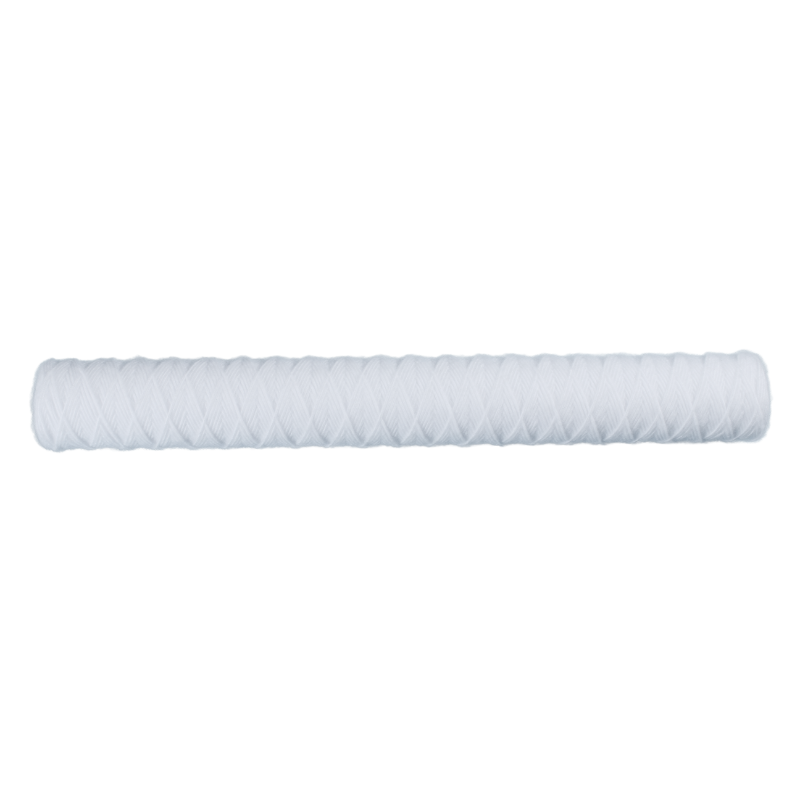
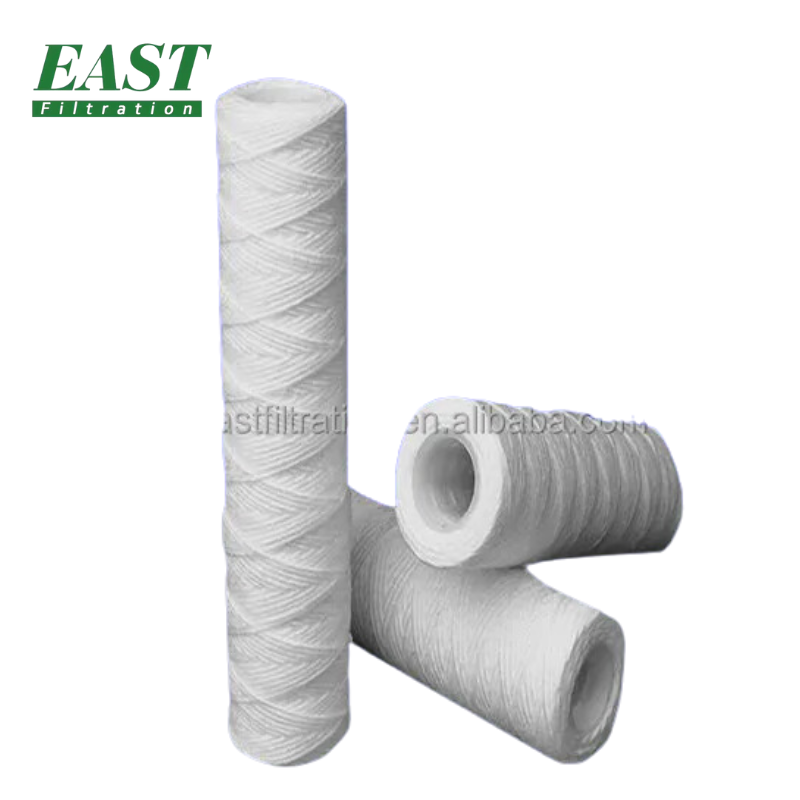
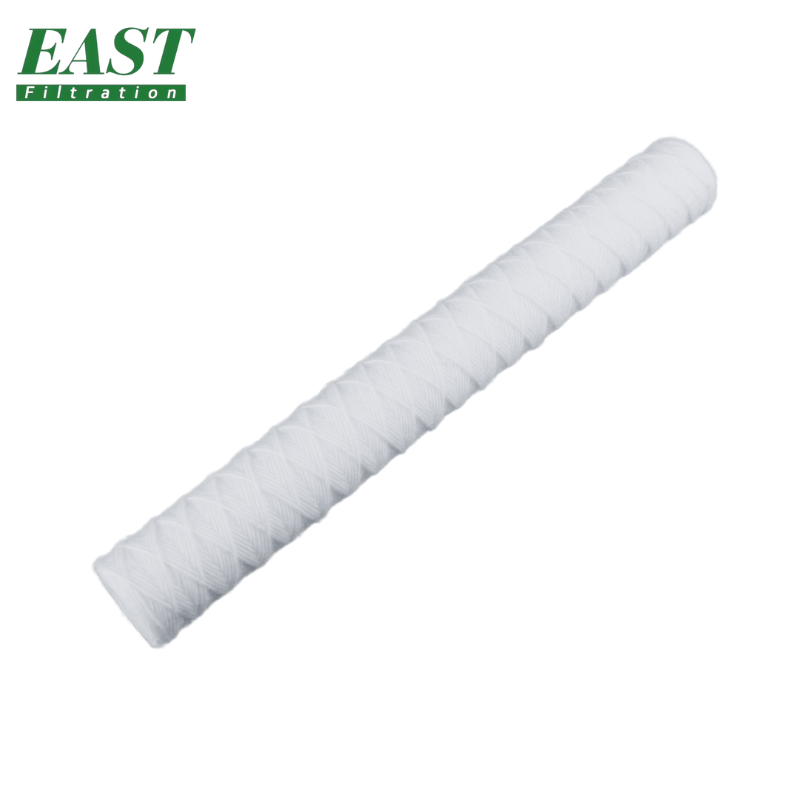
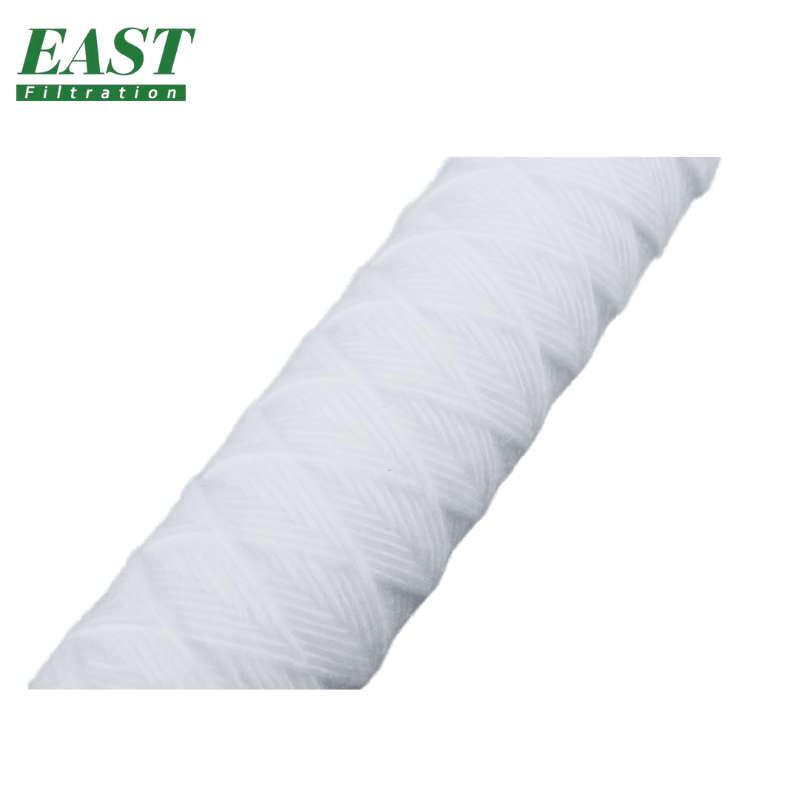
A string wound filter cartridge is made by tightly winding high-quality fiber materials, such as polypropylene or cotton yarn, around a porous core to create a deep filtration structure. It offers high filtration precision and excellent contaminant retention, effectively removing suspended solids, particles, rust, and sediments. This type of filter is widely used in liquid filtration processes in industries such as water treatment, food and beverage, petrochemicals, pharmaceuticals, and electronics. It is especially suitable for applications requiring long service life and low-pressure drop.
Send Inquiry
Technical Parameter
Get factory-direct pricing on versatile string wound filters available in multiple materials for any industrial application. Reach out now to discuss your bulk requirements and wholesale rates!
Product Overview
A string wound filter cartridge is built by winding continuous fibre yarn tightly around a porous core. The winding tension changes as the element builds, so the outer layers stay open while the layers nearest the core close up. Liquid enters from the outside and works inward, and solids are caught at whatever depth matches their size — rust and sediment near the surface, finer particles deeper in the wall. That depth is the point. The whole wall stores dirt instead of only the face, which is what keeps a solids-bearing stream running instead of blinding off early. It suits any liquid where suspended solids, particles, rust or sediment have to come out ahead of the process, and it drops into an ordinary cartridge housing with the media, core and end fittings chosen to match the fluid, the temperature and the housing already on your skid.
Media material: Polypropylene ,Cotton,Fiber Glass
Core Material: Polypropylene,SUS 403,SUS 316
Preeision:1um-300um
Length:10”、20"、30”、40"
Outer diameter: 63.114mm(BB)
Inner diaieter:30mm/28mm
Conneetion: Flat,222,226
Max work Temp: Polypropylene string mateh with plastie frame: 65degrees
Polypropylene string match with galvanized iron: 100 degreese
Absorbent cotton match with stainless steel skeleton: 120 degrees
Depth Filtration Built for Industrial Toughness
These cartridges are manufactured by tightly winding polypropylene, cotton, or fiberglass yarn around a porous core. This creates a gradient density structure that captures particles throughout the entire depth of the cartridge.
While different from pleated filter cartridges, they complement such systems perfectly in pre-filtration or high-load situations, where longer life and chemical resistance are required.
Efficient Replacement for Standard Filter Cartridges
As a leading producer of water filter replacement cartridges, EAST FILTRATION provides wound filters that are interchangeable with traditional pleated filter cartridges in terms of fit and performance. They are widely used in industries
like food & beverage, water treatment, petrochemical, and pharmaceuticals, where fine particulate removal is essential.
Trusted by Global Filter Cartridge Suppliers
Our reputation as professional filter cartridge suppliers means we deliver consistency, reliable quality, and flexibility for OEMs and wholesale clients. Each cartridge undergoes strict quality control to meet performance expectations in demanding
environments, making them ideal replacement water filter cartridges.

Product Advantages
· High dirt-holding capacity — solids are stored through the wound wall rather than on its surface, which is exactly what a heavily contaminated stream needs if it is going to keep flowing between changes.
· Low pressure drop — the graduated wind stays open as it loads, so the element does not quietly become the restriction in the line and pull flow away from the rest of the process.
· Predictable loading — because the wind is graded from outside in, differential pressure climbs in a steady line instead of stepping up suddenly, which makes change-out planning possible rather than reactive.
· Three media and three cores in one body — a plant can standardise on a single housing and vary only the element inside it when a different fluid or a hotter duty arrives.
· Standard lengths and fittings — the element goes into what is already installed instead of forcing a hardware change, an adapter or a new housing order.
Construction & Wound Depth
· Gradient density wind — yarn is tensioned progressively tighter toward the core, so coarse solids stop in the open outer layers and finer particles are caught deeper in; the full wall does the work, not just the face.
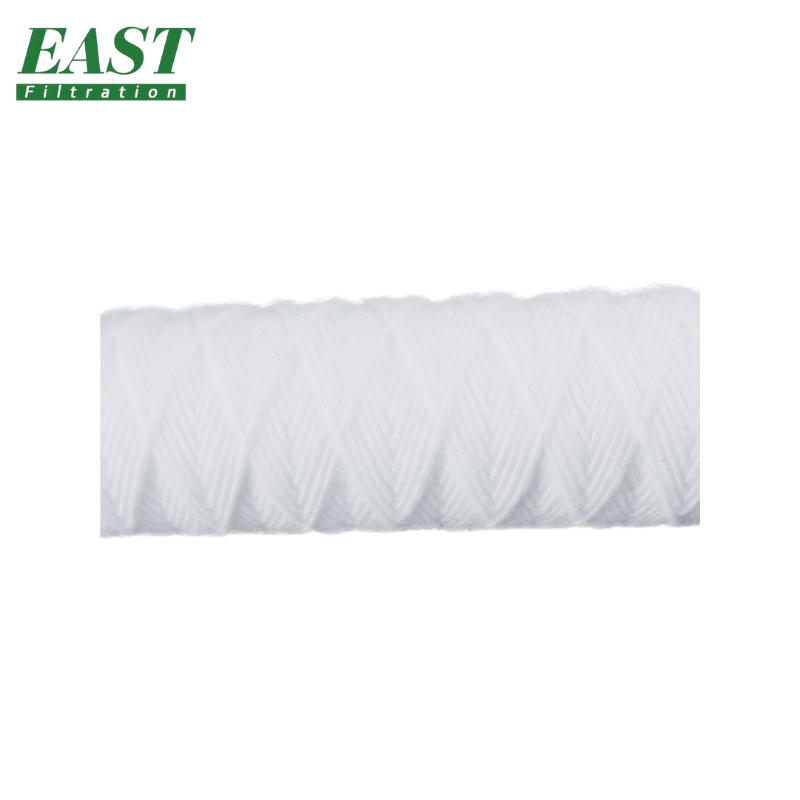
· Continuous wound body — the diagonal diamond pattern on the surface is simply the wind path; there is no pleat pack to distort in handling and no folded media to crush against a cage.
· Three media, one build — polypropylene, absorbent cotton or fiberglass yarn wound on the same core design, so the mechanical structure stays familiar when you change media for a different fluid.
· Core sets the backbone — polypropylene, SUS 403 or SUS 316, chosen for rigidity, corrosion duty and the temperature the element will see in service.
· Open bore, end to end — the hollow core runs right through, so flow passes the wall and exits without a pocket inside the element holding liquid between batches.
· Wound as one part — yarn, core and end fitting finish as a single filter cartridge, so fitting and handling do not disturb the wind.
· In-house cartridge filter manufacture — winding, core assembly and end finishing all happen in our plant, which is why a non-standard length or fitting can be quoted against a drawing rather than a catalogue number.
· Finished end connections — flat, 222 and 226 fittings are produced on the same line, so a change of housing receptacle does not force you into a different cartridge family.
Media, Core & Connection Options
Polypropylene is the wind most industrial lines run. It covers general process water and most chemical streams and it is the sensible starting point unless the fluid says otherwise. Absorbent cotton behaves differently: the fibre itself takes up liquid, and it is supplied on a stainless steel skeleton because that is the pairing the element is built around. Fiberglass is the third option — tell us the fluid and the duty and we will confirm whether it is the right wind for your line rather than leaving you to guess.
The core is not a separate decision. Media and core are chosen together, because the working temperature of the finished element comes from the pair and not from the yarn alone; change the core and the ceiling moves with it. Polypropylene cores keep the element light and suit cooler duties, while SUS 403 and SUS 316 give a rigid, corrosion-resistant skeleton where the process runs hotter or the liquid is more aggressive.
Connections follow the housing. Flat is the plain open end, used where the seal is made elsewhere in the housing; 222 and 226 are code fittings that seat into a matching receptacle, and the code has to be the one machined into your housing — read it off the old element or send us the housing drawing. Length follows the bowl, and the micron rating follows the particle you have to remove: the coarse end where the solids load is heavy, the fine end where polish is the job. These wound filter cartridges can be specified as a complete set — body, core, rating and fitting — in one exchange.
Applications
· Water treatment and wastewater — taking suspended solids, rust and sediment out of raw, process or discharge water before it reaches membranes, resin beds or the next process stage, where a blinded element downstream costs far more than the cartridge.
· Food and beverage — clarifying syrups, brines, wash water and product streams where fine particulate has to come out before filling; the media and the paperwork are matched to your own quality programme.
· Petrochemical and chemical processing — chemical-duty winds for process streams, quench water and solvent lines, chosen against the fluid rather than picked off a shelf by size alone.
· Pharmaceutical — fine particulate removal on process water, rinse water and cleaning lines, where a clean and repeatable liquid matters more than raw throughput.
· Electronics and semiconductor — final particulate polish on rinse and process water, where a single carry-over particle can scrap a batch.
Replacement & Interchangeability
The element is interchangeable with traditional pleated cartridges in fit and performance, so a line already running pleated elements can move across without changing housings or connections. What has to match is a short list: overall length, outer diameter, bore size, the connection code on the end fitting and the micron rating. Send those five details, or the part number printed on the element you are replacing, and the match can be confirmed before anything ships.
The two formats also work well together. Many plants run wound filter cartridges as a coarse stage ahead of a fine pleated or membrane stage: the wound element takes the heavy solids, the fine stage sees a cleaner feed and lasts longer, and an expensive element is protected by a comparatively inexpensive one. That arrangement is common on water treatment and chemical lines where the solids load swings with the batch, because the coarse stage can be changed without touching the fine one.
Installation & Change-Out
1. Isolate the housing, release the pressure and drain it before the closure is opened.
2. Note the connection code and the flow direction on the element you take out — the replacement goes back the same way.
3. Wipe the housing bore and the seal seat clean, and check the O-ring or gasket for hardening or cuts before it goes back into service.
4. Compare the new element with the old one on length, outer diameter, bore and connection before it goes anywhere near the housing.
5. Seat the element squarely so a 222 or 226 code fitting engages fully — a fitting that is only half home will bypass, and the filtrate will look clean while the particle load passes straight through.
6. Close the housing, bring the flow back slowly and vent the air, then check the seal under pressure before the line returns to production.
7. Record the date, the micron rating and the pressure differential at change-out; three or four records are enough to set a realistic change interval for that line.
Manufacturer & Facility
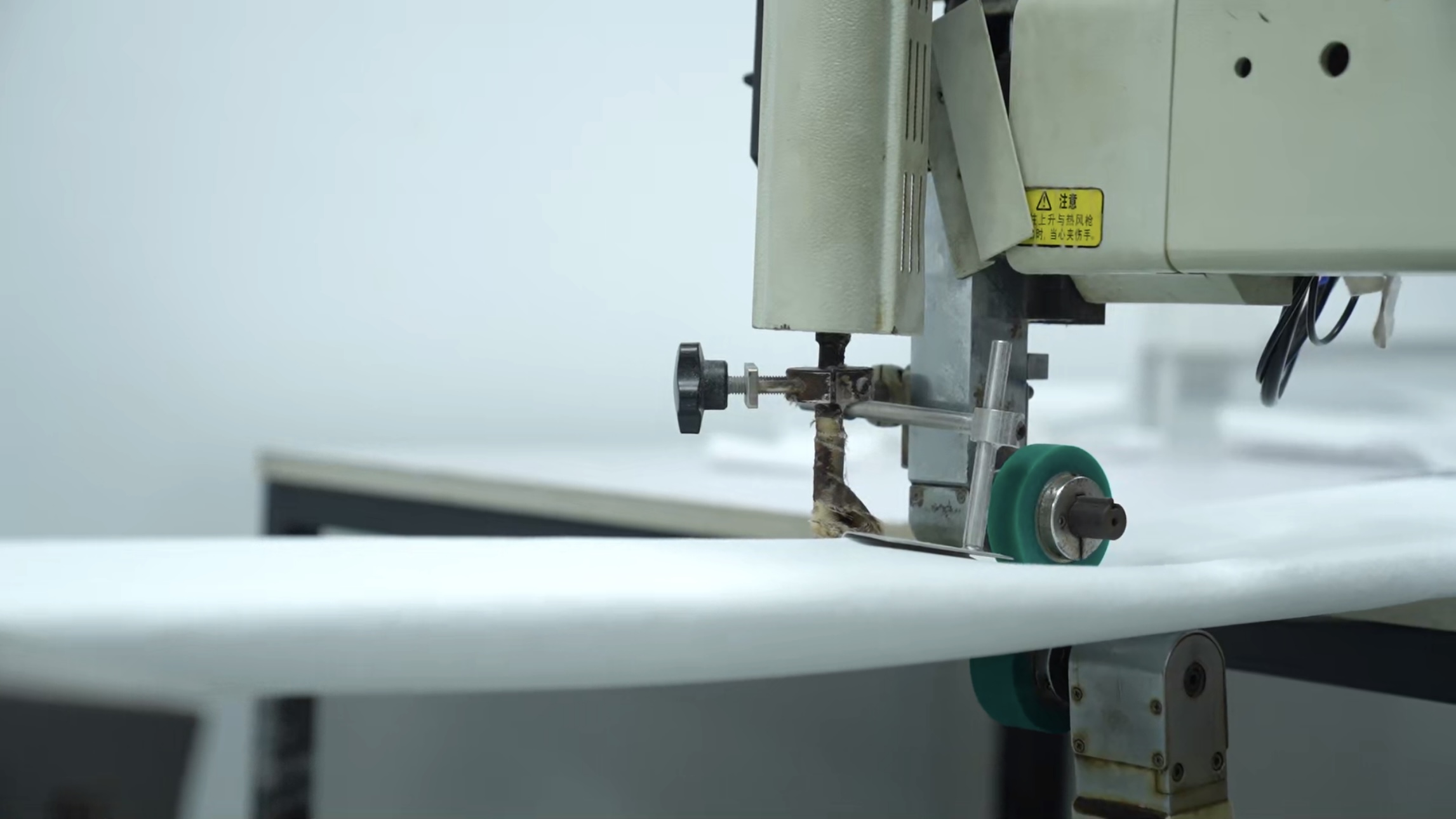
EAST Filtration (Shanghai) Co., Ltd. is a high-tech filtration enterprise working across research, production, sales and technical service. The range runs wider than cartridges — filter housings, liquid filter bags, air and dust filters, filter accessories and water treatment systems — which helps when a cartridge question turns out to be a housing question, because the same team builds both ends. Cartridge filter manufacture here covers the whole element: core assembly, winding, end finishing and inspection. Because a filter cartridge leaves the plant as a finished part rather than a semi-finished roll, a drawing for a non-standard item can be quoted, sampled and repeated. The plant also produces to American, Japanese and German standards, including substitutes for imported products and one-off items built to a customer drawing.
Use to
About Us
Precision Filtration Solutions from a Trusted Chinese Manufacturer
EAST Filtration (Shanghai) Co., Ltd. is a high-tech enterprise specializing in the research, production, sales, and technical services of filtration products. With over 12 years of experience, we are committed to delivering high-quality filtration solutions to our clients worldwide.
Core Manufacturing Capabilities and Quality Assurance
Certifications: Our commitment to quality and environmental standards is demonstrated through our certifications, including ISO9001, ISO14001, CE, and SGS.
Advanced Manufacturing: Operating within a 5,000 m² facility in Shanghai, we are equipped with advanced fabricating machinery and staffed by experienced technicians, ensuring efficient and precise production processes.
Customization and OEM Services: We offer a wide range of products adhering to American, Japanese, and German standards. Our capabilities include producing substitutes for imported products and various non-standard items, tailored to meet specific customer requirements.
Production Strength
Facility Size: 5,000 m² manufacturing campus.
Workforce: A team of skilled technicians and full-time workers dedicated to maintaining high production standards.
Global Reach: Our products are distributed across more than 30 cities in China and exported to countries including the United States, Canada, Italy, Malaysia, and Japan.
Commitment to Sustainability
We adhere to ISO14001 environmental management standards, reflecting our dedication to sustainable practices and minimizing environmental impact throughout our operations.
Customer Collaboration Process
Consultation: Understanding client needs and application requirements.
Product Selection: Assisting in choosing the appropriate filtration solutions.
Customization: Providing tailored products to meet specific standards and requirements.
Quality Assurance: Ensuring products meet stringent quality standards before delivery.
After-Sales Support: Offering ongoing technical support and services post-purchase.
Global Service Capability
Our international clientele includes renowned companies such as BASF, General Motors, Master Kong, Bright Dairy, and SAKATA INX. We are actively seeking global wholesale partners, offering benefits like free samples, market support, and comprehensive after-sales services to foster mutually beneficial relationships.
FAQ
Q1. Can the cartridges be cleaned and put back into service?
They are built as replaceable elements rather than washable ones. Once a wound body has taken solids through its depth, what has changed is the flow path through the wall, and rinsing the outside does not restore it. Change the element when the differential pressure reaches the limit you have set for the housing, or when flow falls away at the same valve position. Where reuse is the priority — typically a coarse, high-flow duty — a washable mesh bag is a better fit than a wound element, and we will say so rather than selling you the wrong format.
Q2. Are string wound filter cartridges suitable for food, beverage or pharmaceutical duty?
Yes, as particulate removal. These cartridges are used on food and beverage streams and on pharmaceutical process and rinse water, where the job is taking fine solids out of the liquid rather than sterilising it. What your own quality programme will want is the media and the documentation behind it: polypropylene and cotton are the winds most often specified for these duties, and the core follows the temperature and the cleaning regime. Tell us the standard your team works to and we will confirm the media and the paperwork that go with the order.
Q3. What happens if my process runs hotter than the element is rated for?
It will not fail in one step, but the wind is what suffers first: polypropylene softens, loses its wound tension, and once the tension goes the gap structure changes and filtration stops being predictable. That is why media and core are chosen as a pair in the first place. If your line runs hotter than the polypropylene pairing allows, the answer is normally a different core or a cotton wind rather than a longer change-out interval. Tell us the highest temperature the element will actually see, including cleaning and flushing, and the pairing can be checked before you order.
Q4. Can we order a non-standard length or a fitting for an imported housing?
The standard build covers the common lengths and the flat, 222 and 226 fittings; anything outside that is quoted against a drawing. Because the winding and end finishing stay in our own plant, a one-off length or a fitting combination for an imported housing does not need a new tooling programme. Send a sketch, or a sample with dimensions across the bore, the outer diameter and the end fitting, and as filter cartridge suppliers we will quote the element to that drawing. Allow time for a first-article check before a full line changeover.
Q5. How do I know when the element actually needs changing?
Watch differential pressure across the housing rather than the calendar. A filter cartridge that has taken its fill shows a rising pressure drop at a steady flow, and once it reaches the limit set for your housing the element is due — running past that point buys nothing and can push captured solids through into the filtrate. The visual check at change-out tells you the rest: a body that is dirty only at the surface was changed early, one that is loaded all the way through was run to about the right point. Log each change so the interval settles on your line's real load instead of someone else's average.
Looking for robust and cost-effective replacement water filter cartridges for industrial use?
Contact EAST FILTRATION today — your trusted filter cartridge supplier for wound and pleated filter cartridges designed to meet your exact filtration standards.